Kensington Gardens
the statues and monuments in the eastern half, from the Albert Memorial to a bronze terrier
Kensington Gardens holds more public sculpture per acre than any other park in London, and most visitors see two pieces of it: the Albert Memorial and Peter Pan. This page covers the palace end: the monuments, the gates and the two statues made by relatives of their subjects. The rest of the park's works are on the second page.
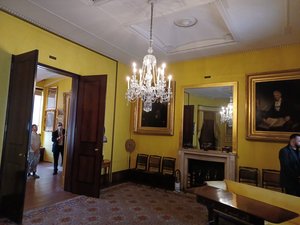
A park of royal gifts and family portraits
Two of the statues here were made or paid for by people related to the subject, which is unusual anywhere. Queen Victoria at the palace was sculpted by her own daughter, Princess Louise, who was a professional sculptor and exhibited as one. William III was a present from Kaiser Wilhelm II to his uncle Edward VII.
That is what happens when a park sits next to a working palace: the commissions come from the household rather than from a committee, and they are personal in a way that a civic monument never is.
The entries
The Albert Memorial
Kensington Gardens, south side SW7 Nearest station: South Kensington
Unveiled in 1872, Grade I listed, and the most elaborate piece of public sculpture in Britain: Albert gilded and seated under a Gothic canopy, holding the catalogue of the Great Exhibition, with four continents at the corners and a frieze of 169 named artists around the base.
Queen Victoria
Kensington Palace W8 Nearest station: High Street Kensington
Outside the palace, showing her at her accession in 1837 rather than in the later widowed image, and carved by her fourth daughter Princess Louise, a trained sculptor who worked professionally. She is looking towards the rooms she was living in when she was told she was queen.
King William III
Kensington Palace, south front W8 Nearest station: High Street Kensington
A gift from Kaiser Wilhelm II to Edward VII, a copy of a statue by Heinrich Baucke made for Berlin. It stands at the south front of the palace and is one of very few German royal gifts to survive in a London park.
Physical Energy
Lancaster Walk W2 Nearest station: Lancaster Gate
George Frederic Watts's rider, shading his eyes and looking east. Watts was a painter first and worked in sculpture only occasionally; he returned to this one for decades, and casts of it also stand in Cape Town and Harare.
The Great Exhibition gates
Kensington Gardens, south side SW7 Nearest station: South Kensington
The last built remnant of the Great Exhibition of 1851, whose glass building was moved to Sydenham and burned there in 1936. The exhibition made a profit of £186,000, which bought the land that South Kensington's museums stand on.
The Orangery
Kensington Palace W8 Nearest station: High Street Kensington
Built in 1705, generally attributed to Hawksmoor with Vanbrugh's involvement, and designed for a queen who wanted somewhere warm to keep citrus and be seen. It is a very grand building for a garden shed.
The deer and fauns
Kensington Gardens gates W8 Nearest station: High Street Kensington
A matched pair topping the gates, a reminder that this ground was part of Henry VIII's deer chase before William and Mary bought Nottingham House and renamed it Kensington Palace in 1689.
The Esme Percy memorial
Broad Walk W8 Nearest station: High Street Kensington
A small bronze terrier on the Broad Walk near Palace Gate, from 1961, a memorial to the actor Esme Percy. It is at knee height, it is easy to miss, and it is the friendliest object in the park.
Questions
Who sculpted the statue of Queen Victoria?
Princess Louise, Duchess of Argyll, her fourth daughter, who trained at the National Art Training School and worked as a professional sculptor. She is one of very few members of a royal family anywhere to have produced a public monument to a relative.
How many artists are named on the Albert Memorial?
169, on the Frieze of Parnassus around the base: painters, architects, poets, composers and sculptors, carved in relief and identified by name. It is a nineteenth-century canon in stone and reads today as much as a statement of taste as a memorial.
What is left of the Great Exhibition?
The gates in Kensington Gardens, the museums and colleges of South Kensington that its profits bought, and the name Crystal Palace, which is now a district, a park and a football club. The building itself was moved to Sydenham and destroyed by fire in 1936.
Where is Peter Pan?
By the Long Water, further north, and covered on the second Kensington Gardens page along with the Elfin Oak, the Speke monument and the Italian Gardens fountains.
Elsewhere on this site: the rest of Kensington Gardens, guide to London statues.