


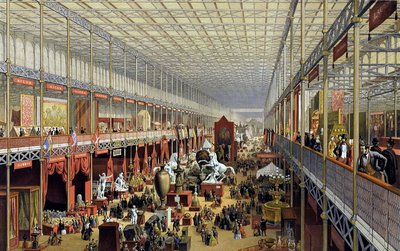

The lost palace in Hyde Park
History
A spectacular glass palace stood in Hyde Park for less than a year. Its story did not end when it was taken down.
Read the storythe hidden places nothing signposts, and how to find them
Hidden London is not one place but many, and most of them are unmarked: side doors, strange museums, lost palaces and stories below street level. A darker guide to a brighter city.
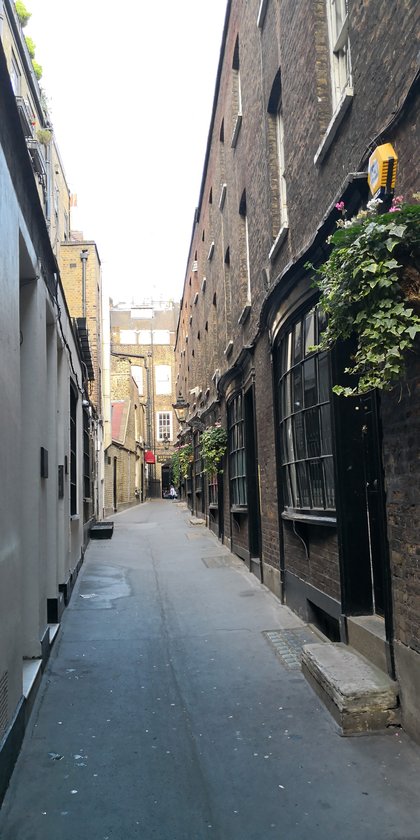
Six routes. One city underneath.
Hidden London is not one subject, so this guide does not pretend it is. Each route below collects a different kind of overlooked thing, and every entry gives the street and the nearest station, so the places stay findable rather than merely described.
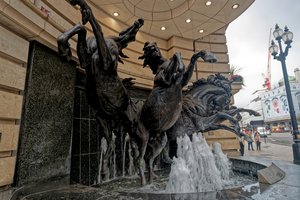
The sculpture this city walks past every day, with the street and the nearest station for each one.
Open this route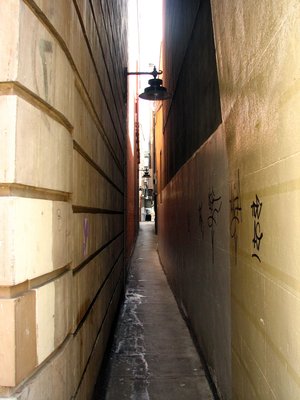
Low lights, unmarked entrances and rooms that keep no sign above the door.
Open this route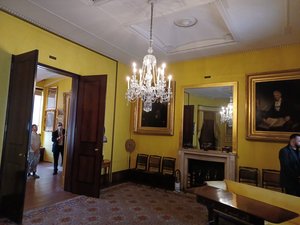
The eccentric, the forgotten and the wonderfully odd, room by room.
Open this route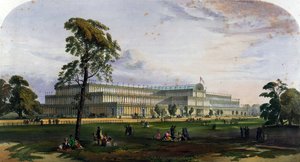
Grand houses that vanished from the map, and the traces they left behind.
Open this route
Sourced history kept clearly apart from the folklore that grew around it.
Open this route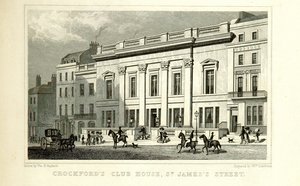
A forgotten empire of card rooms beneath Mayfair and St James's.
Open this routeAn after-dark walk through a quieter city.
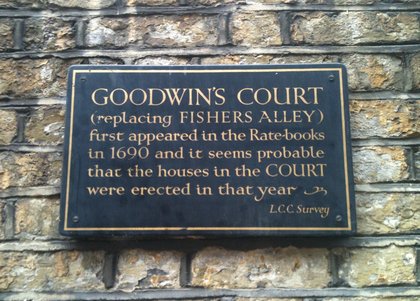
Why this stop. Begin where the theatres empty into lanes that still remember older stages.
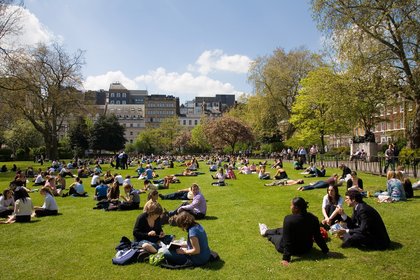
Why this stop. Holborn keeps its collections behind plain doors on a very large square.
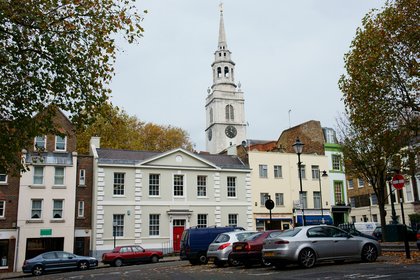
Why this stop. A green, a clock tower and a parish that was once outside the city walls.
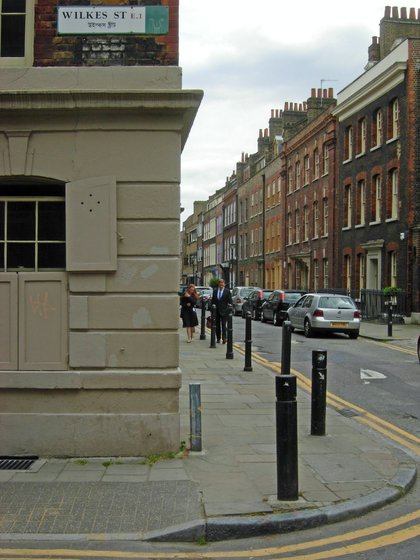
Why this stop. Georgian silk-weavers' houses, their shutters still on the top floors.
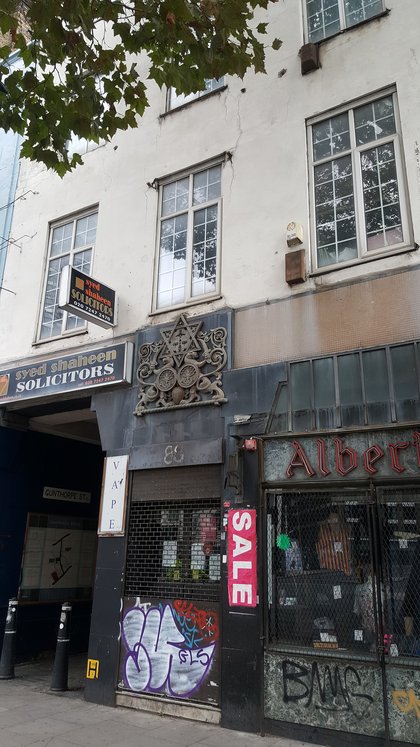
Why this stop. The eastern edge, where the street names change language every few decades.
Extraordinary places. Real streets. Still there.
History
A spectacular glass palace stood in Hyde Park for less than a year. Its story did not end when it was taken down.
Read the story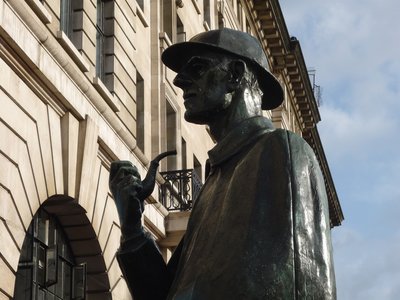
Sculpture
Sherlock Holmes on Marylebone Road, Peter Pan in Kensington Gardens: the city puts up monuments to people who never lived.
Read the story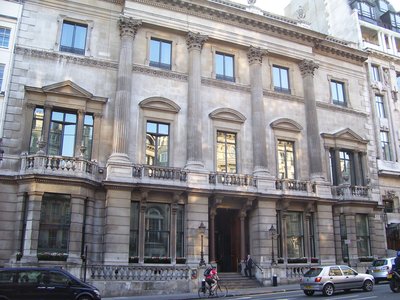
Hidden histories
Crockford's opened on St James's Street in 1828 and made a fortune from the men who ran the country.
Read the storyIndex
The recurring subjects, each with its own sheet of entries.
Sherlock Holmes, Peter Pan, Paddington Bear and the rest of the people who never lived.
Cleaners, gardeners, cordwainers and commuters, in a city that mostly commemorates generals.
Lions, a cart horse, a cat with an oyster, and a flock of sheep in Bloomsbury.
From the Quadriga at Hyde Park Corner to the oldest bronze statue in London.
Charity-school children in painted uniform, still standing above their old doorways.
The Embankment run, from the Anglo-Belgian memorial to the Battle of Britain.
Coats of arms on livery halls, insurance offices and the Stock Exchange.
Nine neighbourhoods, and what is still standing in each of them.
Smithfield, Clerkenwell, the City, Borough, Bermondsey, Shoreditch, Highgate, Hornsey and Woolwich, with the street for every entry.
Where it is worth walking with your head up, park by park and street by street.
Peter Pan, Physical Energy, the Albert Memorial animals and the Elfin Oak.
The rest of the park, including Queen Anne's Alcove and the Italian Gardens.
Achilles, the Serpentine, and the memorials that arrived late.
The Guards Memorial, the Cadiz Memorial and an Ottoman gun.
Anteros rather than Eros, the Three Graces on the roof, and a listed police post.
An Egyptian goddess over a saleroom door, a Moore, and the only carillon in London.
River stairs, Execution Dock, and the churches of the sea captains.
The one office in the City with a seat in Parliament, and the figures above it.
The furniture nobody photographs: the datable, the listed and the misexplained.
How to date one from the cipher, and the eight in London that are listed.
Vulliamy's sphinxes and camels, cattle troughs, real cannon and a sewer gas lamp.
What the Metropolitan Drinking Fountain Association left on the streets.
Weathervanes, emblems and reliefs, and the truth about the Mall lampposts.
The South Bank Lion, the Panyer Boy and the things that fit no other category.
Eight central crossings, the eight bronzes on Vauxhall Bridge, and which of them is the Ladies' Bridge.
Rick Buckley's protest against surveillance cameras, and where the noses are.
What closed, what was demolished, and what is still down there.
The disused stations still standing, and the ones you can get inside.
Whitehall, Nonsuch, Richmond and the Tudor rooms found under Greenwich.
Places you can walk into, checked for whether they are still there.
The ones behind another door, with the closures marked.
Small, specialised and mostly free, from Leighton House to an operating theatre.
Where the odd ones come from, and the stations named after them.
The documented, the part-folklore and the outright invented, labelled as such.
A Grade I Mayfair staircase, a Frank Matcham theatre, and where the art is free.
If you have never looked at London this way before.
What survives of the first two thousand years, and where to stand in front of it.
How the sculpture is grouped, how to read the map, and where to begin.
What this is, and what it is not.
Secret London started as a catalogue of the city’s public sculpture, compiled street by street, and that is still the spine of it. This guide keeps the same habit: name the thing, say where it stands, say what is known about it, and leave the folklore clearly labelled as folklore. Secret places in London are not usually far away. They are simply unlabelled, which is a different problem, and one a guide can fix.
Nothing here is a tour and nothing needs booking. Secret places in London reward the detour of a hundred metres more reliably than the detour of a day, so the entries are written to be read standing up, on a phone, in the rain.
Anything the city keeps in plain sight without explaining it: a statue with no plaque, a drinking fountain nobody drinks from, a doorway that leads somewhere unexpected. Nothing here is behind a paywall or a private door, and nothing requires permission to look at.
Each entry carries the street and the nearest Underground station, which is enough to stand in front of the thing described. Where a work has moved or been removed, the entry says so rather than sending you to an empty plinth.
Frequently. Sculpture gets cleaned, relocated and occasionally stolen; bars close; museums change their opening hours. Entries are dated so you can see how old the information is before you rely on it.
Most of it, free, at any hour, because it stands in the street. Museums and bars keep their own hours, and a few of the places described below street level are not open to the public at all. Those are marked.

